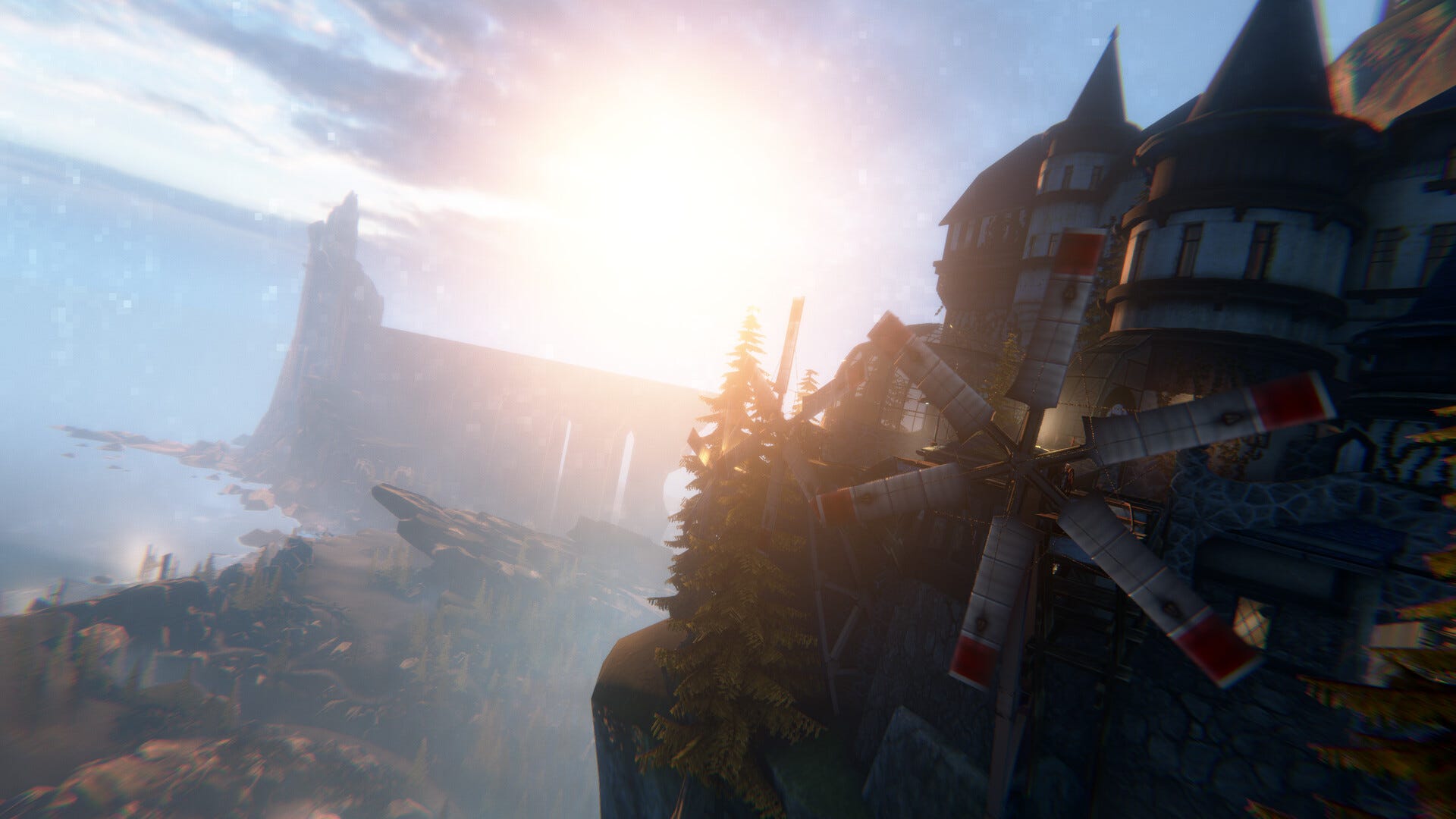
When done right, immersive puzzle games can rival the best gaming experiences of all time. No other genre forces you to learn the lore and rules of the world to proceed. No other genre rewards you as handsomely for putting yourself into the minds of the developers. No other genre results in a greater sense of accomplishment as you watch the credits roll (...except maybe Soulslikes). Sadly, this genre is also one of the most fragile. One bad puzzle can taint a player’s experience with a game forever. Dimhaven: The Lost Source is the latest project to cross this tightrope. It’s a game whose opening minutes captured me faster than any in recent memory. Yet, even in the last hour, I was unsure whether I’d be cheering on a new entry in my shortlist of great immersive puzzle experiences or mourning another case of wasted potential.
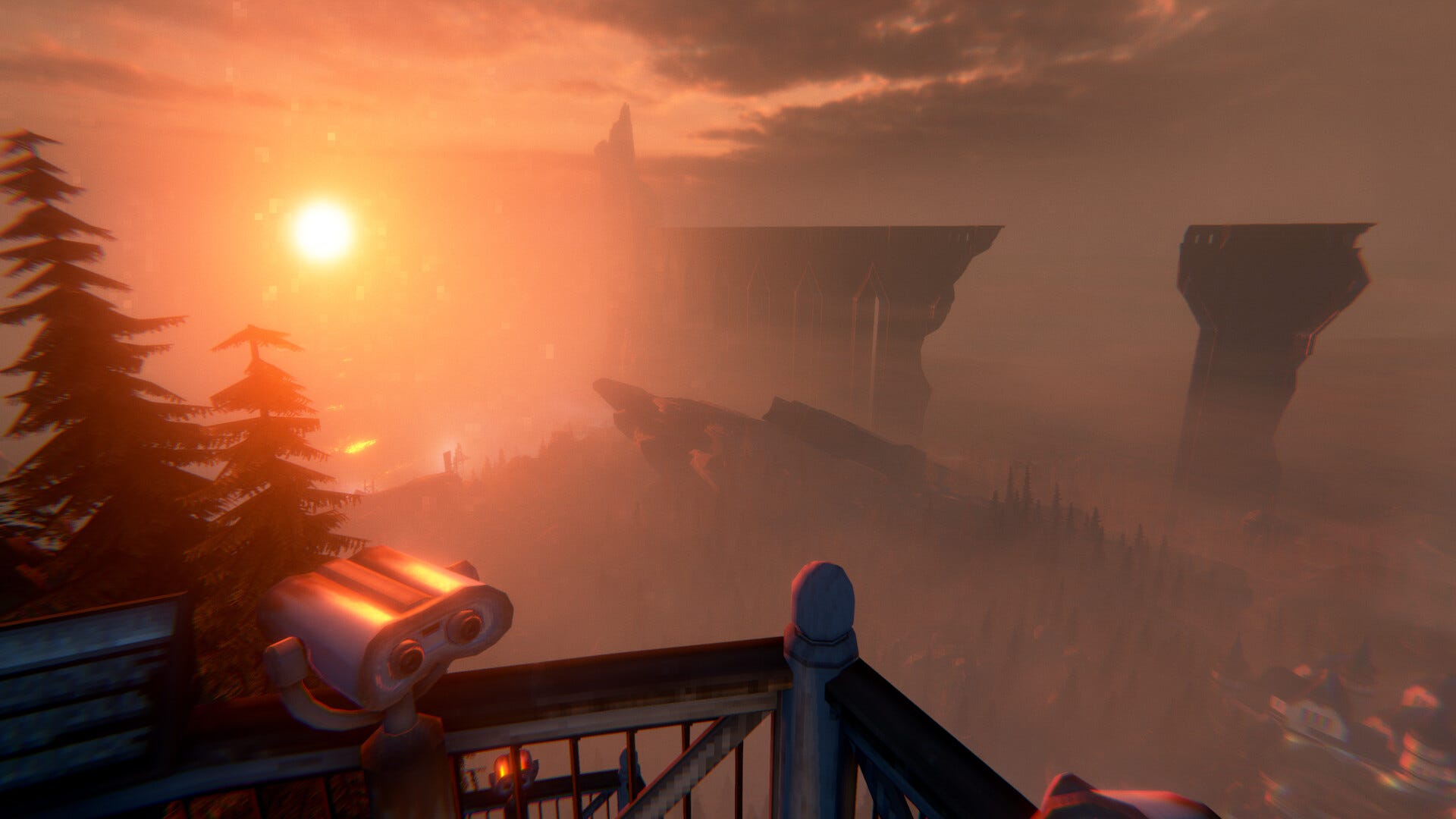
Dimhaven wastes no time throwing you into the action. Within the first few minutes of hitting Start, you learn that you’re searching for your uncle, who has gone silent in a mysterious island town, and that you’ve taken it upon yourself to parachute from a plane onto the island to search for him. As you regain your senses, you realize the island has become remarkably vacant, with no welcome party in sight.
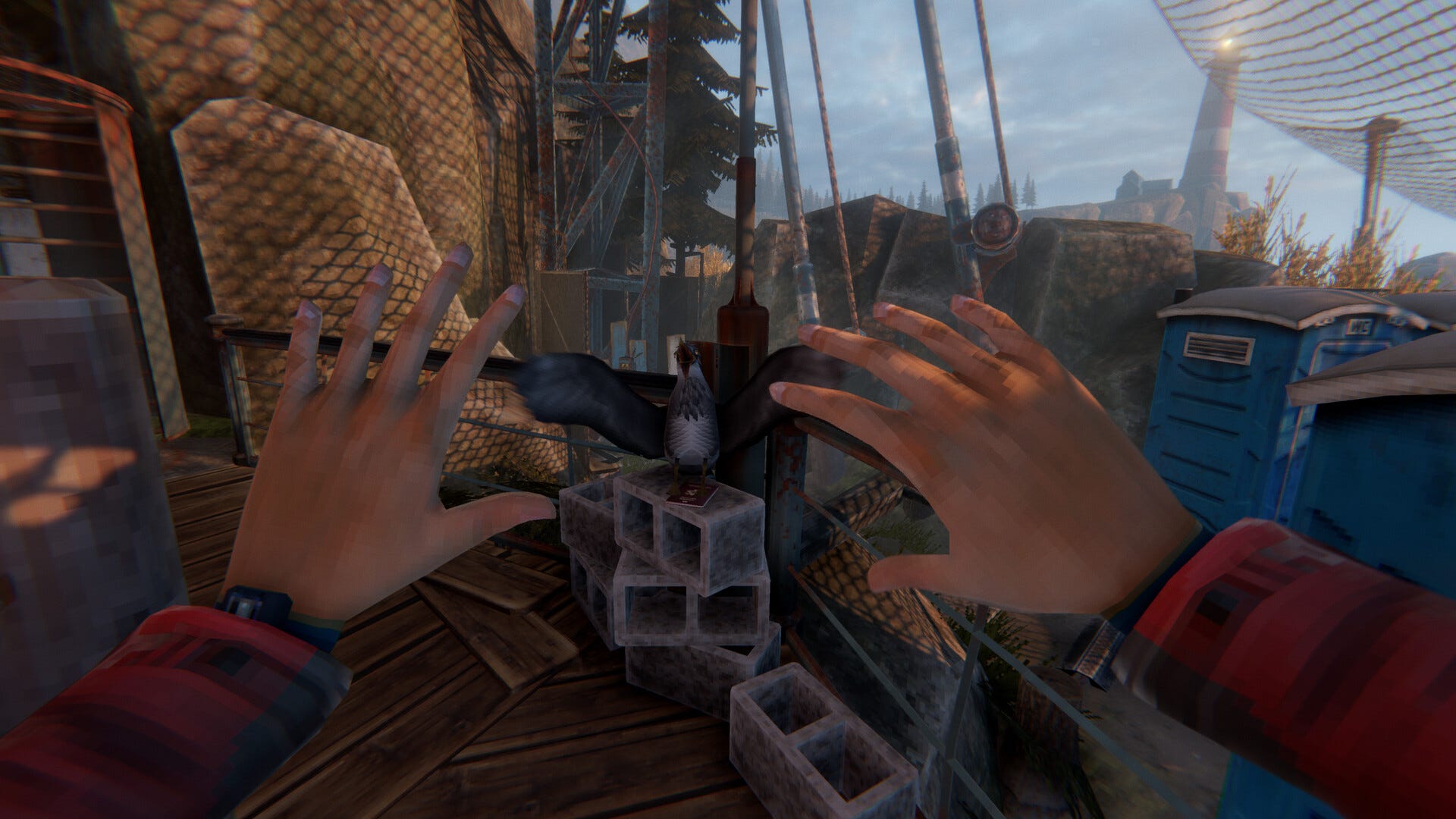
The premise alone is interesting, but it’s the way Dimhaven quickly begins to lay out its puzzles that initially sold me. Within the opening moments of the game, you find your progress repeatedly impeded by the lack of maintenance and operation of the entrance gate. This is fairly typical for almost any game worth its salt, but the illusion crafted to enhance the sense of immersion is remarkably impressive. Each manufactured roadblock feels reasonable: a seagull steals your passport, the visitor machine that quizzes guests before allowing them through the gate to leave the docks is malfunctioning, and there’s no power in the main ticketing area. You are not inundated with arrows and quest markers, nor does the game automatically pull hints into some handy notebook; it trusts its design and leaves it to the player to piece everything together themselves.
It’s a risky strategy that implodes more often than it succeeds. When choosing this route of puzzle design, the progression of logic must be clear. If you refuse to give hints, then I (and every other player) must be able to logically reason my way from point A to point B. If the only clue I have references a ham sandwich and the answer is hidden inside a toilet tank, then I’m likely going to get pissed off because I had no reasonable way of arriving at that answer without making leaps in logic. The first area in Dimhaven is one of the best-designed puzzle spaces I have ever seen in this regard. Each puzzle leads seamlessly into the next, and every solution feels like an “Aha!” rather than an “I guess...”
While the first area revolved around the many facets of the entrance zone, the next few puzzles shifted toward mechanical, technician-themed challenges involving wires, switches, and other electrical contraptions. The puzzles weren’t terrible because, as the hints came together, I got the sense of an abandoned workshop that had developed its own shorthand and methods of operation. Still, something felt a little more artificial than I would have liked. The game started to lean less on learning the rules of the world to find solutions and a little more on busting out a pen and paper to solve what I would consider mathematically adjacent puzzles. They were challenging, and they were fun enough to solve, but I couldn’t help feeling that the game was beginning to lose the plot in favor of simply trying to stump the player.
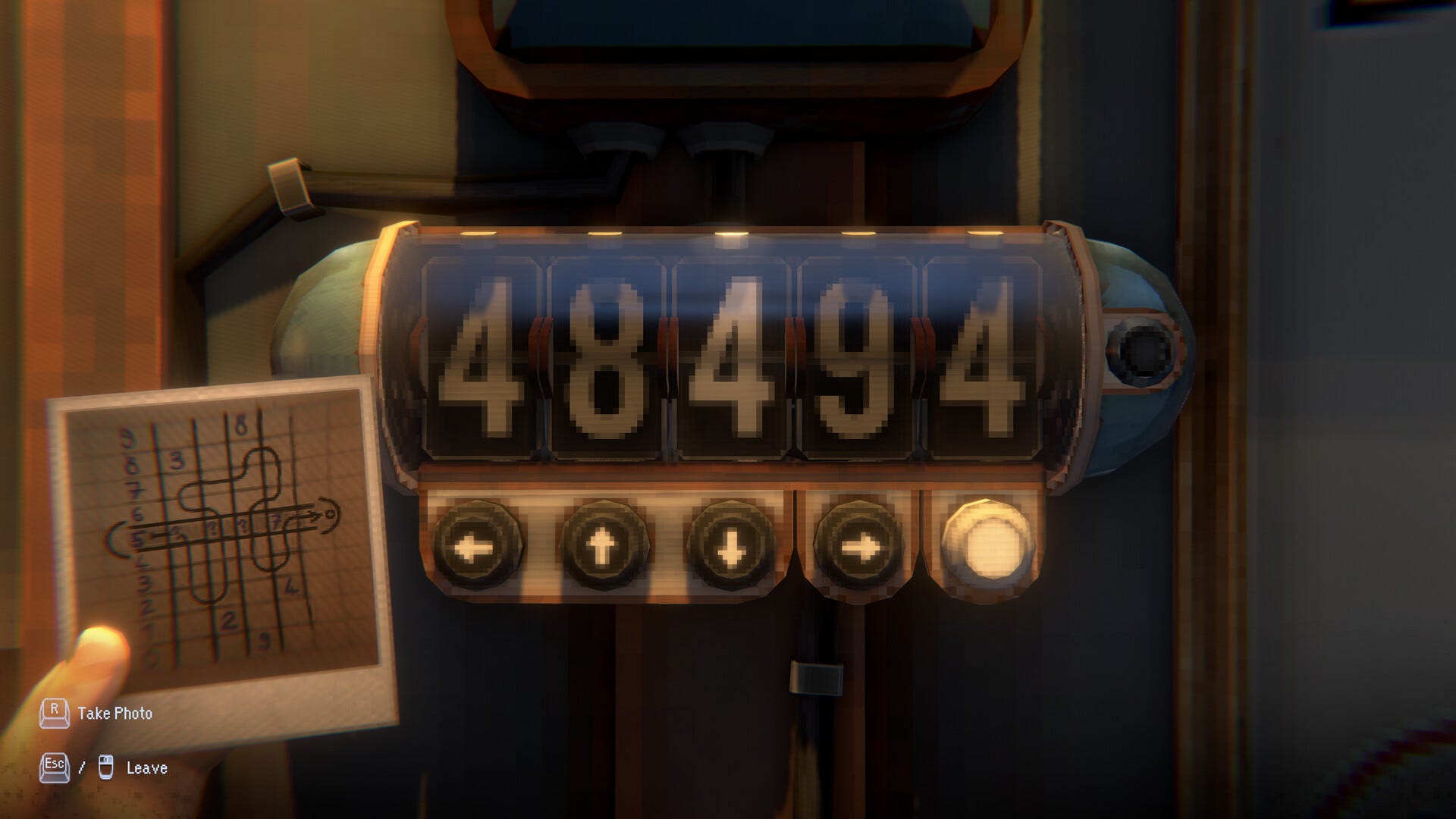
That, to me, was the most apparent tightrope act Dimhaven had to perform. It constantly balanced building environmental puzzles rooted in the lore of the world against the temptation to include puzzles that seemed to exist not because they enriched the story or setting, but because they would present a formidable challenge for dedicated puzzle enthusiasts. I want to be clear that neither approach is inherently out of place, and I ultimately enjoyed both categories of puzzles. Still, I couldn’t shake the feeling that, in pursuit of challenge, the team sometimes flew a little too close to the sun.
Occasionally (maybe two or three times), Dimhaven committed what I consider to be a puzzle game cardinal sin. Whether intentionally or not, it introduces a few red herrings into its puzzles with no obvious way of understanding which aspects of the environment belong to which puzzles. It’s the worst feeling to become fixated on a detail that’s clearly important, only to later discover that it was important—just not to the puzzle you were currently solving. It’s forgivable in some cases, but in a game with so few hints, it definitely annoyed me. If you’re sensitive to even the vaguest spoilers, skip the next paragraph because I’m going to lightly touch on one of the puzzles that frustrated me.
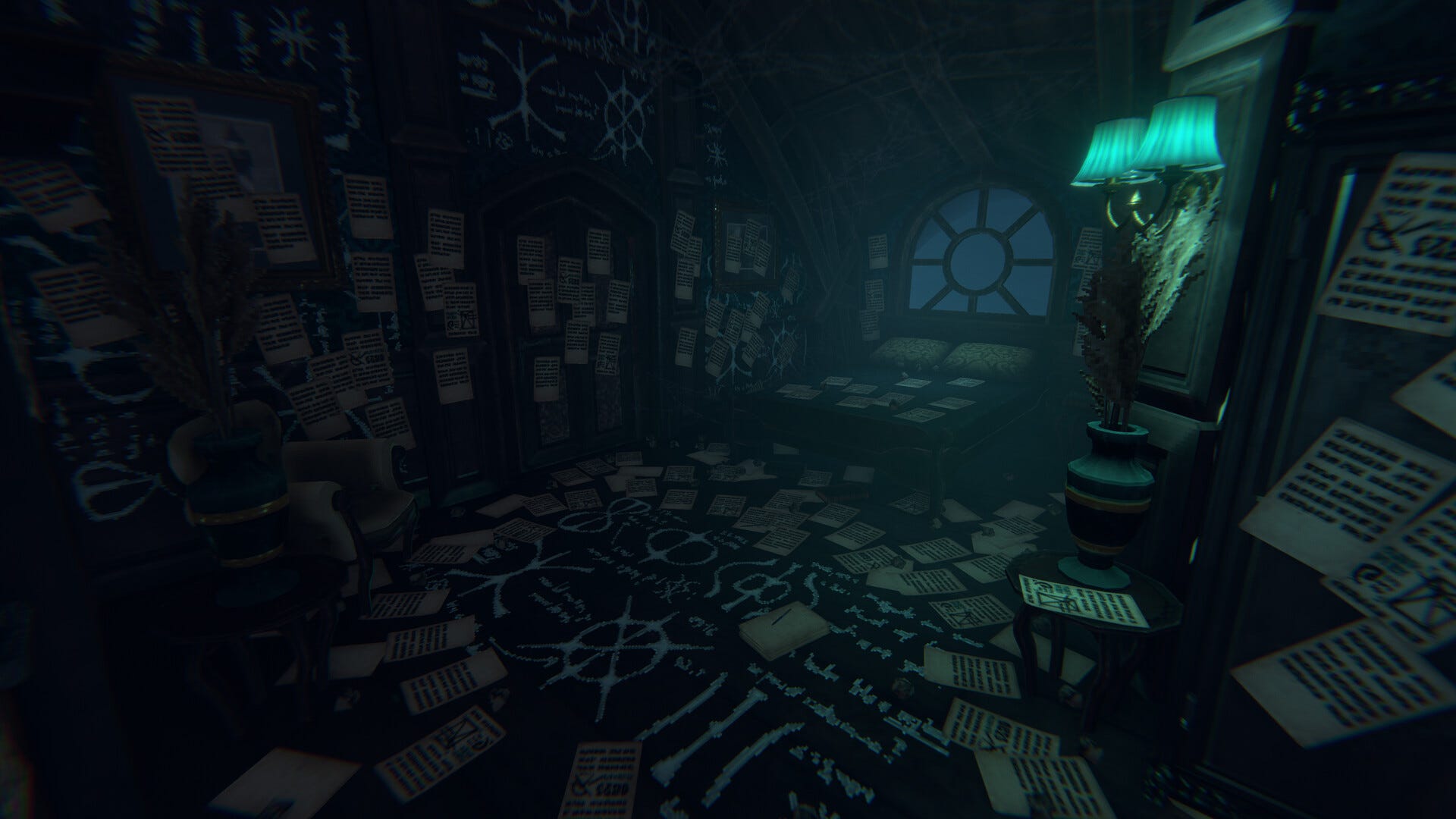
There is a set of roughly a dozen cabinets that plays an important role in two different puzzles, which is perfectly fine. The issue is that both puzzles are math-adjacent, and there are numbers associated with the cabinets that are relevant to only one of those puzzles. I’ll give you a hint as to which one (not the first). This resulted in me relentlessly trying to force those numbers into a clue from the first puzzle that was just vague enough to make it seem plausible.
The worst part of the above example is that these puzzles seemed to have no meaningful connection to the story or environment. They existed simply to challenge (and maybe trip up) the player. The handful of moments where I felt the puzzles didn’t meet the incredibly high standard set by the rest of the game weren’t enough to sour the experience, but they did pull me out of the immersion that the game worked so hard to build. The feeling that all of your accumulated knowledge has finally come together to mean something is one of the greatest experiences a puzzle game can offer. Undercutting that by introducing a puzzle that feels oddly out of place or unnecessarily convoluted creates a level of dissonance that ultimately feels like a misstep.
It’s for this exact reason that I enjoyed the story of Dimhaven, but I didn’t love it. As invested as I was in the mystery surrounding my uncle, at least half of the game was spent solving puzzles that had little to do with him or the central narrative. If anything, it just convinced me that my uncle and our late relatives were fiends for secret passageways and unusually obfuscated locks. Where the story eventually goes is undeniably cool, but I can’t help imagining an alternate version of this game that forces me to uncover the truth primarily through its puzzles, rather than through the notes and audio logs scattered between them. Despite that lack of cohesion, I genuinely enjoyed the twists and turns the story delivered from beginning to end.
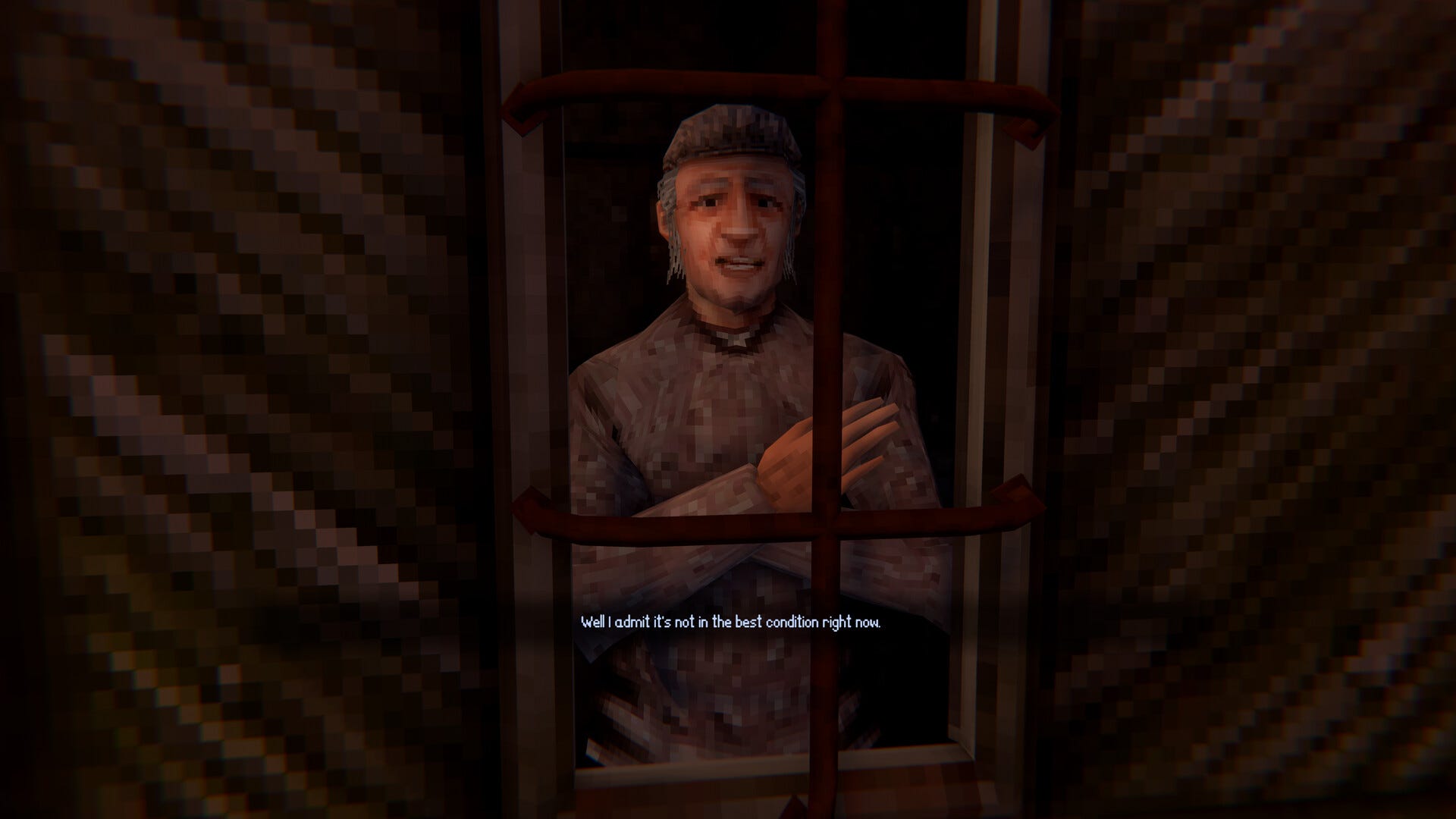
The story is only enhanced by the game’s supporting elements. The low-poly aesthetics worked well for a reason I can’t quite articulate. Maybe it was because it made it easier to direct attention to the points of interest, or maybe it triggered some dormant nostalgia of old-school immersive puzzle games that pioneered the genre. Similarly, the music really helps solidify the mood, often giving off a sense of mystery and wonder without evoking fear and uncertainty. Never once did I feel like the game would take a turn to horror, despite the underlying mysteries that kept that option open as a possibility. I would argue that the tone and setting in these types of games are just as make or break as the puzzles themselves, and Dimhaven put its best foot forward in that regard.
So, did Dimhaven make it across the tightrope? Well, I think it depends on the angle from which you’re looking. If you’re primarily searching for a progressive challenge that forces you to think critically in several different contexts in an effort to stump you, it absolutely succeeds. If you’re looking for a game that seamlessly melds its puzzles into its world, making the two feel inseparable, I think the game succeeds more often than it doesn’t, but it undoubtedly misses the mark a few times.
Dimhaven tells you before even starting the game: it is not for the faint of heart. The puzzles are difficult (some I would argue unjustifiably so) and it is not a title meant to usher new players into the genre. That being said, I don’t want to berate a team for swinging for the fences in one of the most treacherous genres in gaming. It’s a great title for players looking to scratch that itch to roleplay as the ultimate sleuth and problem solver in a foreign world.