Those familiar with the genre know that Soulslikes are supposed to be tough, brutal, and mentally taxing—often ramping up in difficulty until you arrive at a final boss fight that demands near-perfect execution and mental resilience that few players have the patience for. So why was it that when I faced the final boss of Mio: Memories in Orbit, I felt not fear, not frustration, but comfort?
The answer applies to nearly my entire experience with the game. Through its visuals, its story, and—more than anything—its music, Mio pulled a level of raw emotion from me that I’ve rarely felt while playing other Soulsvanias (Soulslike + Metroidvania). I won’t bury the lead: I wholeheartedly recommend Mio: Memories in Orbit. But more than with almost any other game in this genre, I hope you’ll read on to understand why this one surprised me as much as it did.
What Is Mio: Memories in Orbit About?
Explaining Mio isn’t easy—and that’s largely because it’s one of those classic amnesia stories. You play as Mio, a spaghetti-haired little robot who wakes up aboard a derelict ship. You don’t know what’s happening, you don’t really know who you are, and all you have is a disembodied voice speaking in what sounds like poetic fragments.
It doesn’t take long to learn that the ship is doomed, and unless you intervene, everything onboard will perish. The interesting twist is that there are no organic beings present—only robots.
This setup leads to a generally predictable story. There are a few surprises here and there, but for the most part, I could see where things were heading. In some cases, moments only landed as surprises because the game didn’t do the best job setting up characters who later became fairly pivotal. And yet, despite all of that, Mio turned out to be unexpectedly touching.
The way the story unfolds and how the characters slowly develop over the course of the 15–20-hour journey is handled with a surprising amount of care.
A World Without Hope
The story takes place within an ecosystem on the verge of collapse, and the robots inhabiting it are struggling to cope. Not always out of fear—though that’s certainly present—but because their sense of duty, and the meaning behind their existence, has been called into question.
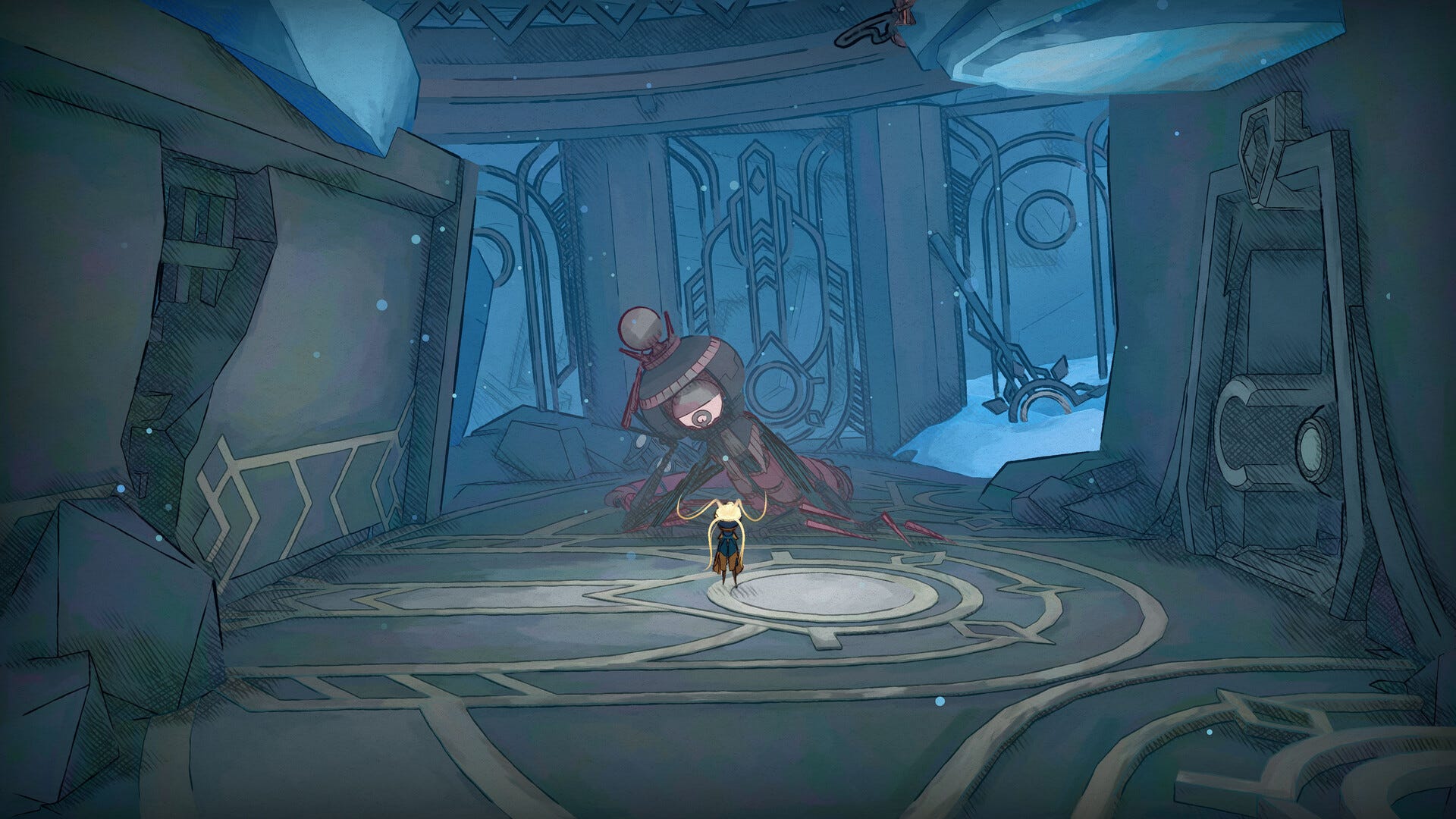
Whether you’re witnessing the comedic relationship between the ship’s main tinkerer and its minion-like assistants, or listening to the pain and regret of a machine that believes its failure doomed everything, there’s a somber energy that permeates the entire game. It makes you appreciate the smaller moments and approach the larger ones through a different lens.
Gameplay is Good, but not Great
This is where I think most players will walk away feeling lukewarm.
With Soulslike elements front and center, the combat deserves close scrutiny. Mechanically, Mio feels similar to games like Hollow Knight or Nine Sols. You have a standard attack, unlock traditional Metroidvania upgrades over time, and customize your playstyle through a module system, which you have access to at this game’s “bonfires”.
The core combat feels responsive and precise enough that I never felt cheated by a boss. That said, I wish the module system offered more room for creativity. I ended up using the same handful of modules for most of the game, and many late-game perks never synergized well with my builds—largely because of how expensive they were to equip.
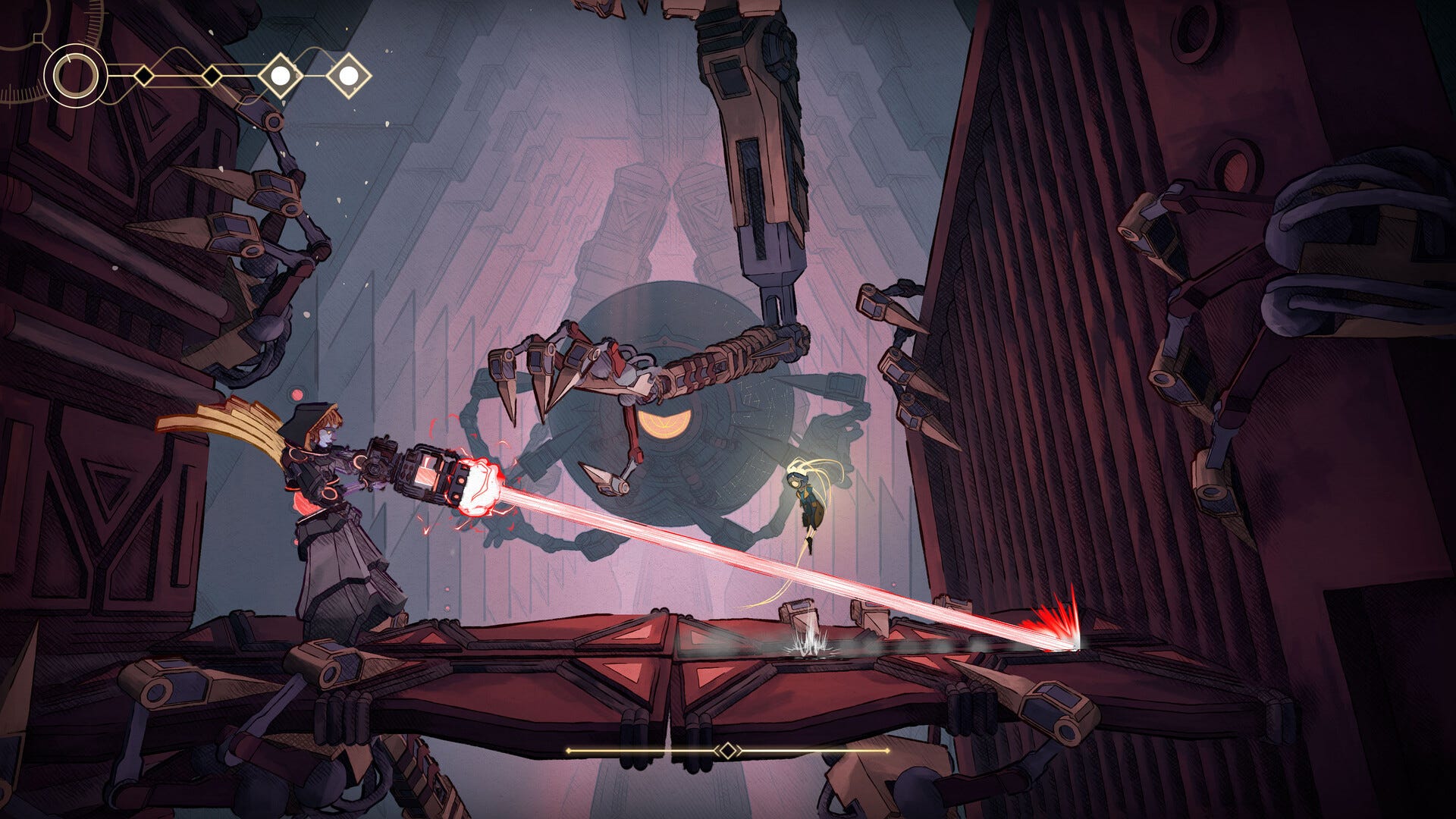
Enemy variety and boss encounters are fairly standard for the genre, landing somewhere in the middle in terms of difficulty. The game is challenging, and many players will find certain bosses frustrating. While the runbacks are never as punishing as something like Silksong, a few are undeniably annoying. Thankfully, accessibility options let you adjust the difficulty if that’s a dealbreaker.
Enemy design, overall, didn’t leave a lasting impression. While I enjoyed most encounters moment-to-moment, there are probably only one or two enemies I’ll remember long-term. That said, I do want to give a special shoutout to one boss fight that ended up being entirely platforming-focused rather than combat-driven—a genuinely refreshing change of pace.
Platforming: Where Mio Truly Shines
Platforming is easily where Mio is at its best.
The world is packed with platforming challenges of varying difficulty, and I loved almost all of them. The sheer number of clever obstacle combinations created some genuinely satisfying platforming puzzles. Importantly, the difficulty consistently hovered in a Goldilocks zone—challenging, but never so punishing that it felt pointless to attempt.
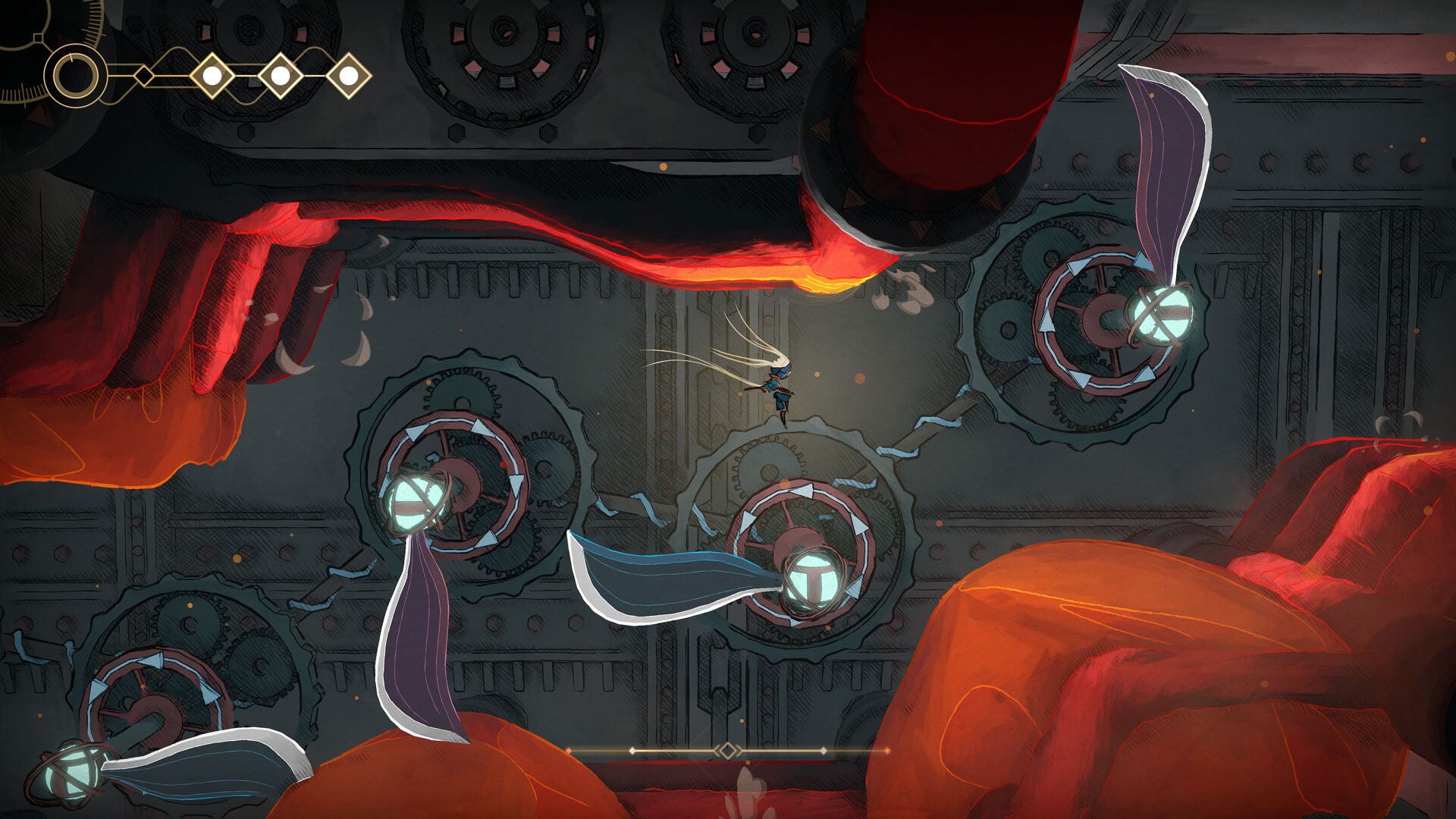
The only downside is that rewards didn’t always match the effort required, which circles back to my earlier issues with the module system.
Visuals and Artistic Direction
Here’s where the game locks in and reaches a level few others do.
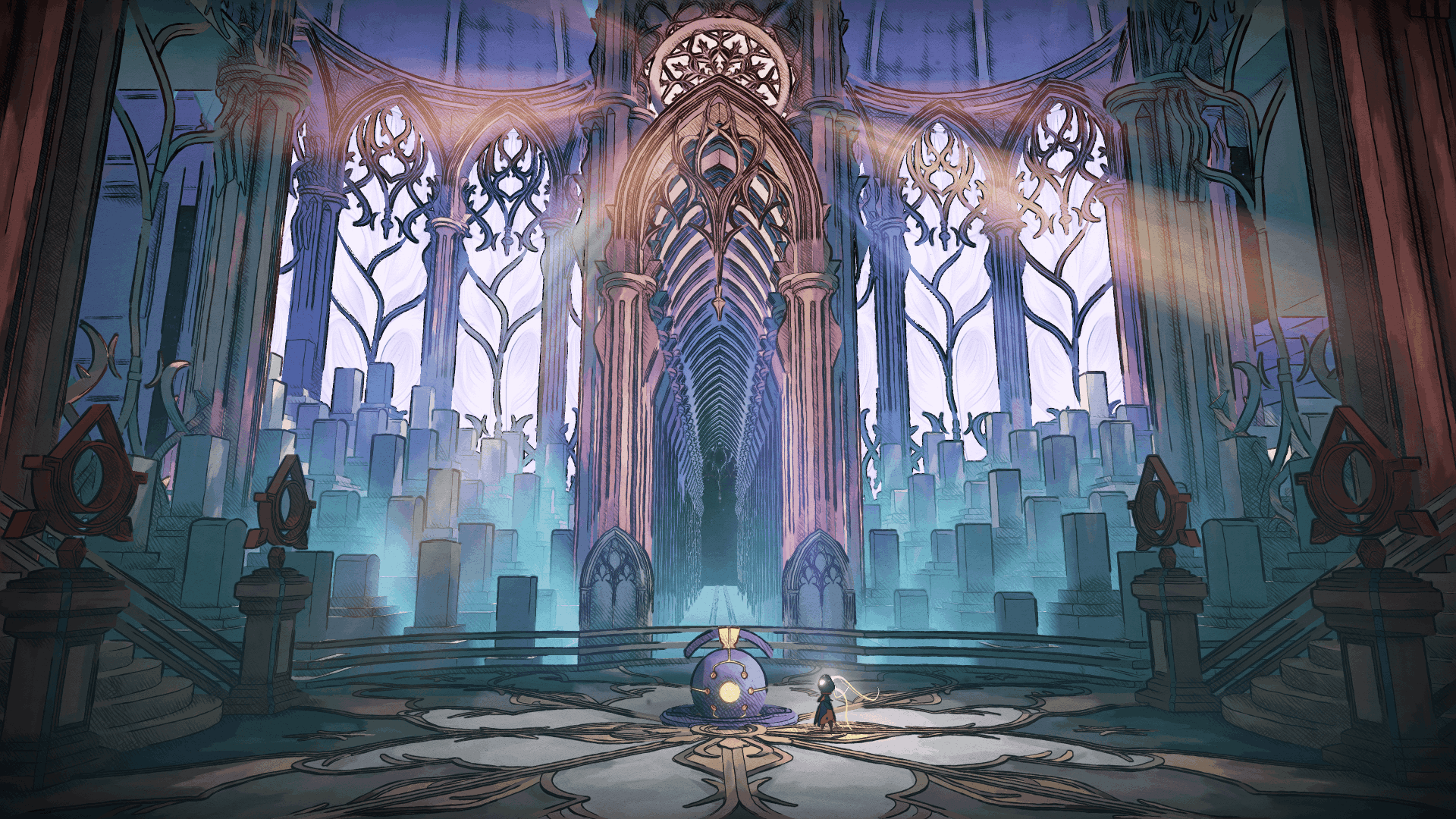
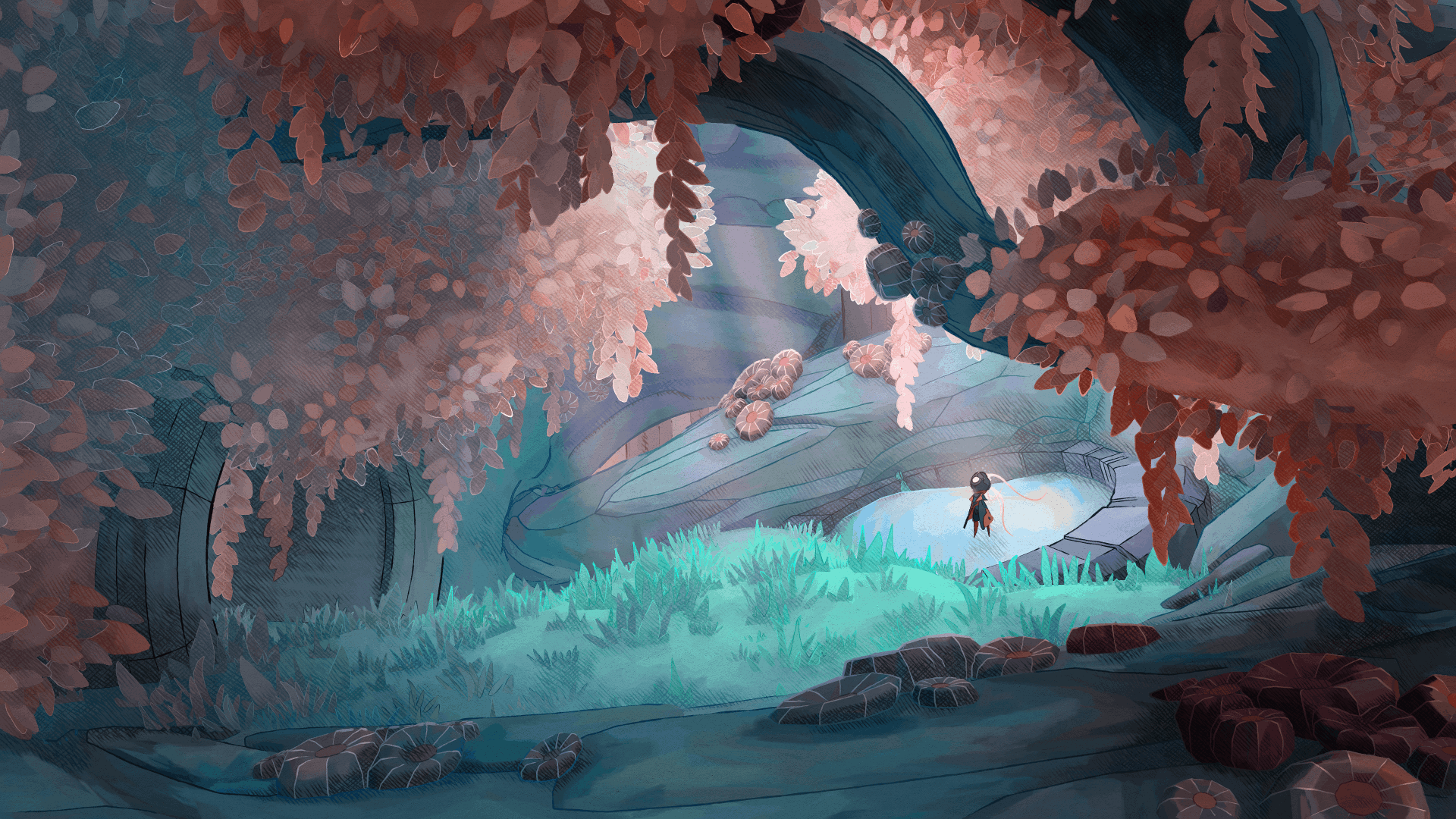
I could argue that the visuals alone make Mio: Memories in Orbit worth playing. The hand-drawn art style is unlike anything I’ve experienced before. Sketch-like strokes form the foundation of every scene, while bold and deliberate color choices bring each environment to life. The result feels like concept art in motion.
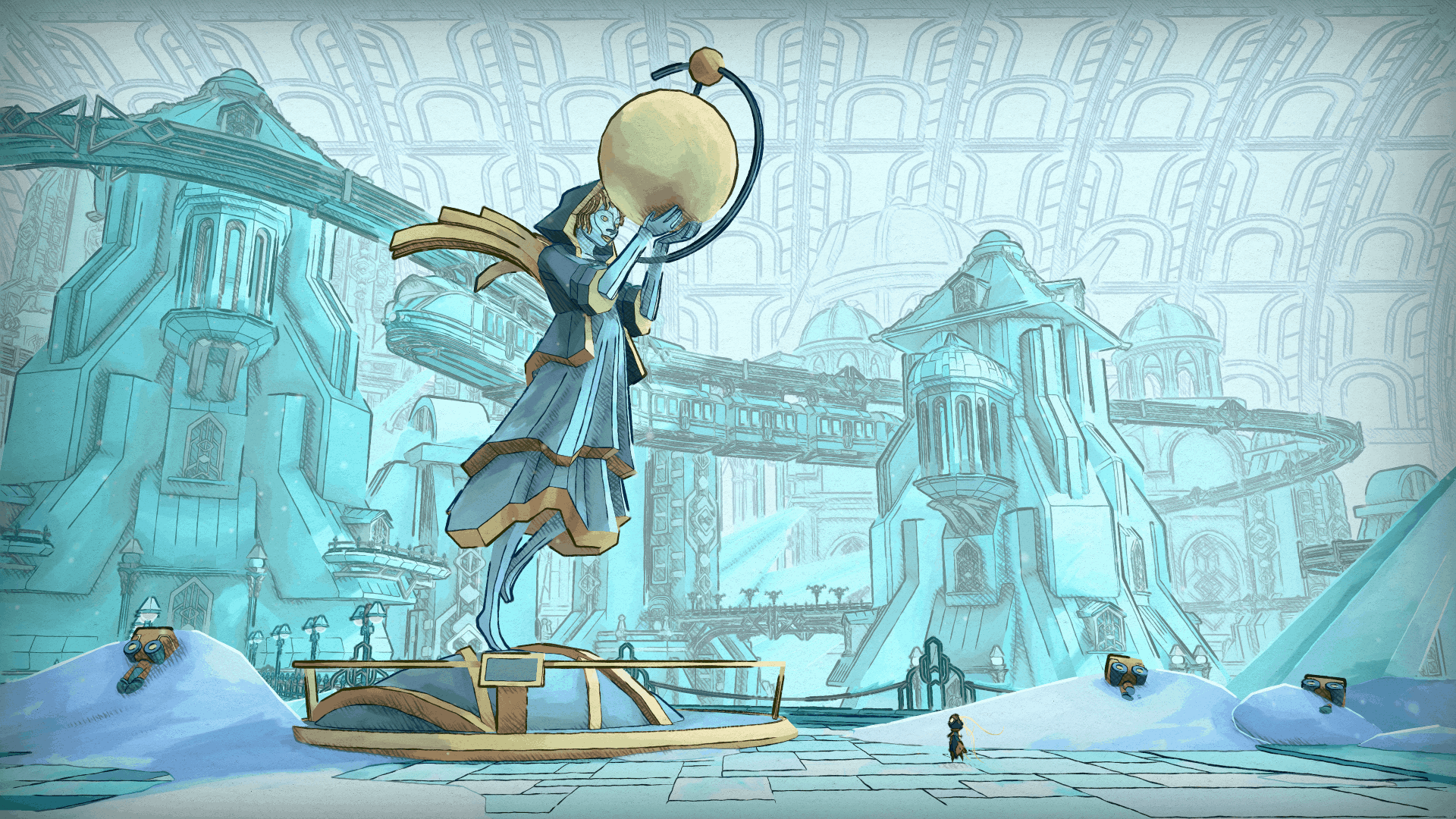
It captures desolation and pain with a strange, almost beautiful melancholy—something I can only describe as a kind of visual blues. It’s a cliché, but it applies here: every frame feels like a painting. And honestly, it might be one of the most gorgeous games I’ve ever played.
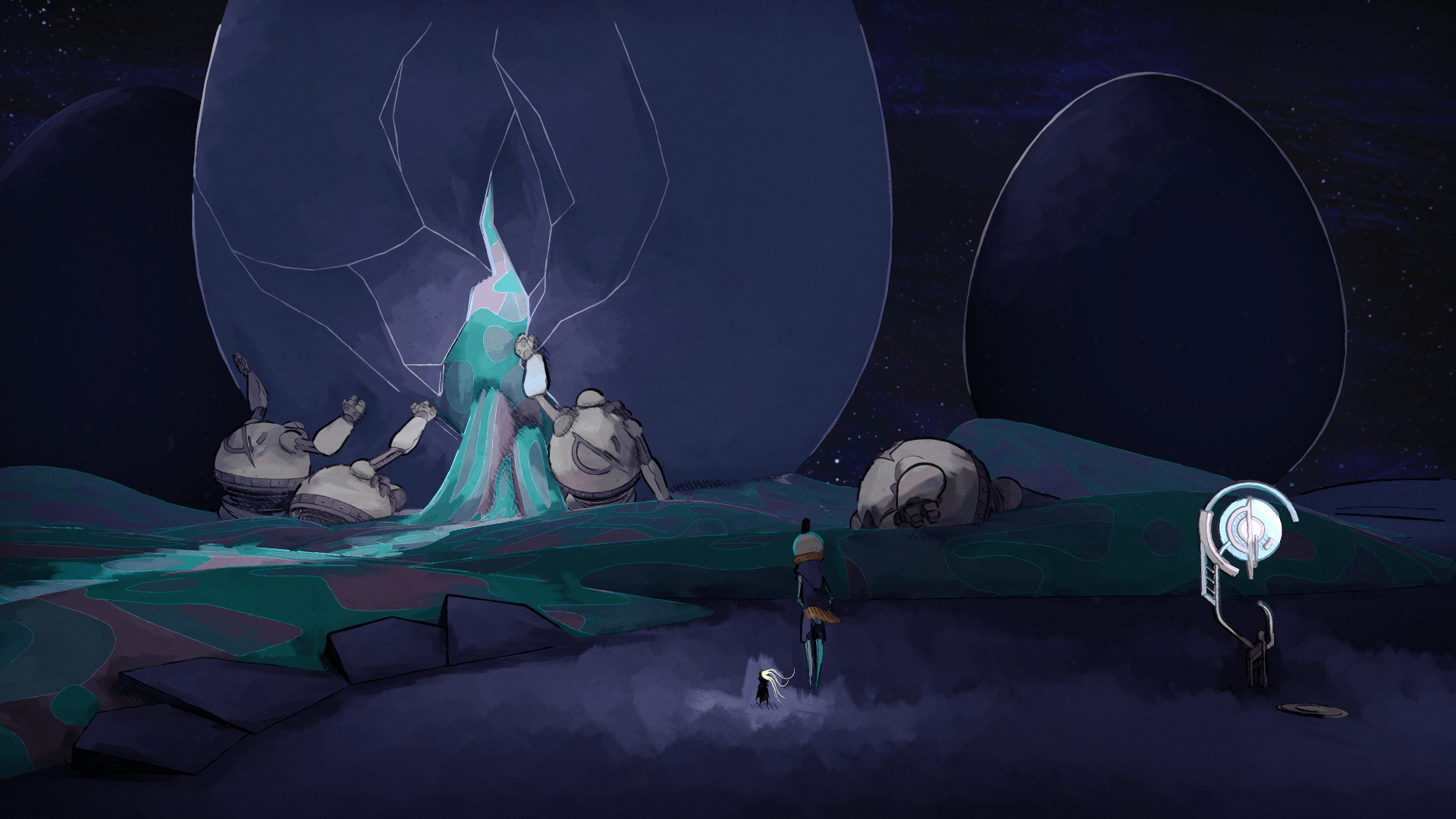
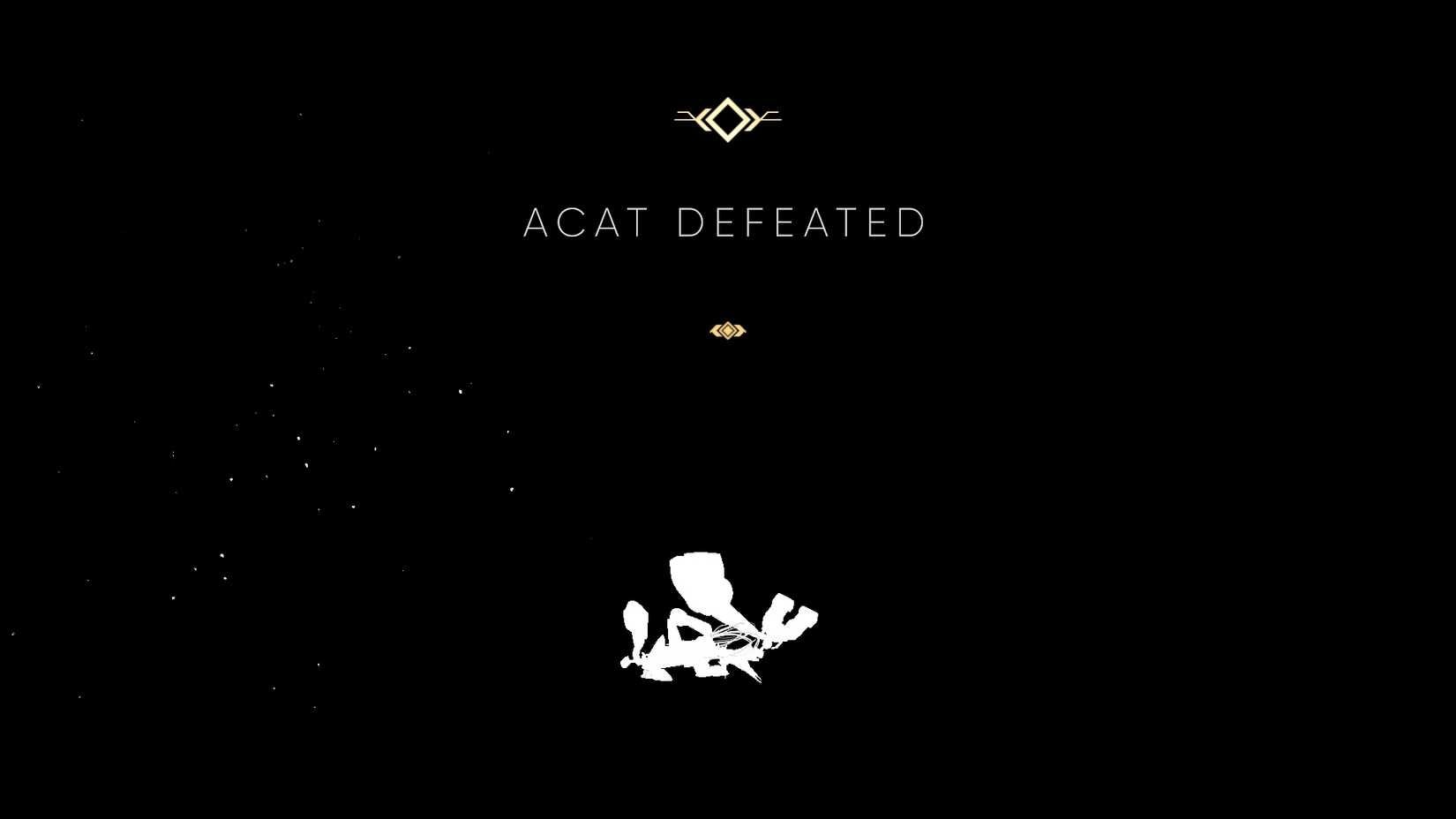
This extends to the game’s directorial choices as well. Death—whether yours or a boss’s—is often portrayed through an abrupt cut to black, punctuated by stark white silhouettes. Over time, this choice grows increasingly impactful as its meaning evolves alongside the story.
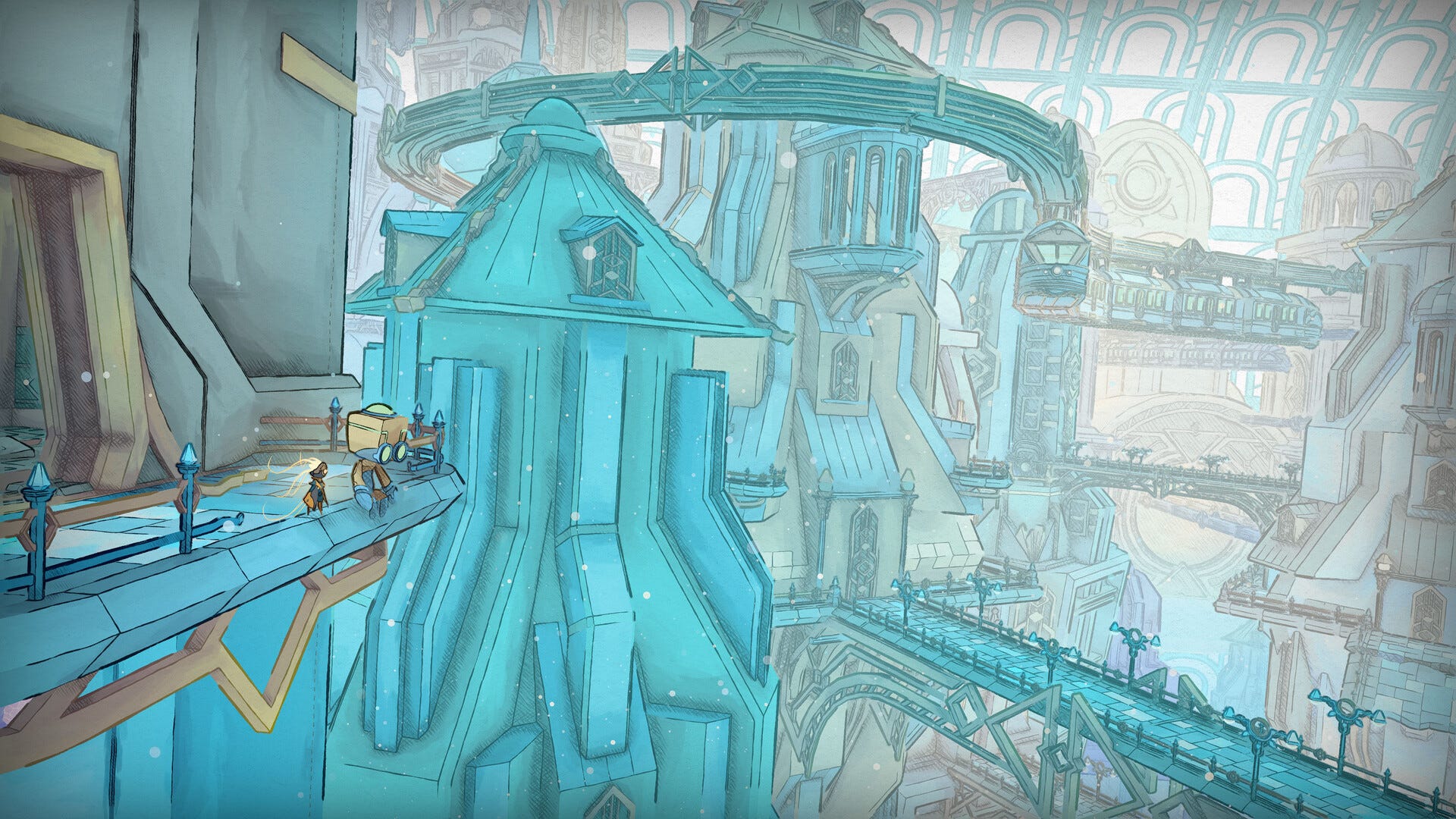
Subtle animation quirks help toe the line between robotic programming and genuine emotion, and each biome feels thoughtfully realized. Selling the idea that a single spaceship could house such varied environments—each with its own history—is no small feat, and Mio pulls it off. Without this level of thought and artistic intention, I genuinely believe the game would have fallen flat.
Soundtrack: The Heart of Mio
And now, the most important part of the game.
Composer Nicolas Guéguen completely guided my emotional interpretation of Mio: Memories in Orbit. I’ve spent days desperately searching for confirmation of a vinyl release, because this is without a doubt one of my favorite video game soundtracks of all time.
I’m a sucker for heavy use of choirs and layered vocals in instrumental music. When done well, they can steer emotion with pinpoint accuracy—and that’s exactly what happens here.
Techno-electronic beats paired with mesmerizing female vocals constantly reinforce the game’s core theme: the blurred line between sentient beings and programmed machines. Some boss tracks feel like battles against rogue A.I., while others place you in something closer to a quasi-religious conflict. The biome themes oscillate between quiet melancholy and unsettling growth.
I could write another thousand words about the music alone, but the soundtrack is available on Spotify and YouTube. Even if you never play the game, I strongly recommend giving it a listen.
Final Thoughts
It should be obvious by now that I loved Mio: Memories in Orbit. It’s a deeply affecting piece of art that will stick with me for years. That said, it isn’t perfect. It’s not a masterpiece, and I don’t expect most players to connect with it the way I did.
Still, if you’ve read this far, all I ask is that you give it a chance. Peruse the art. Listen to the music. And if you’re up for it, play through the game.
Mio: Memories in Orbit has so much heart and personality that I’d hate to see it dismissed as “just another Soulslike Metroidvania.” Slow down. Take it in. And show some love for what I believe is one of the most passion-fueled indie projects in a long time.