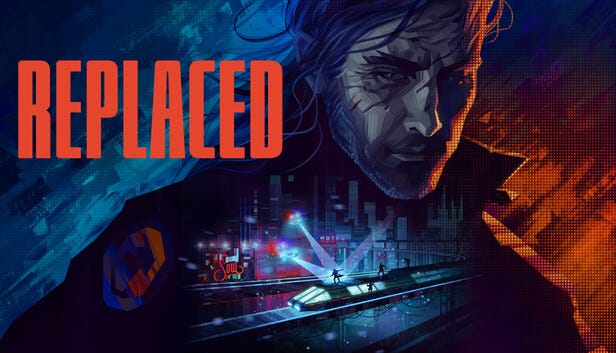
REPLACED is a game colored by a studio that has been tested in unimaginable ways. The Ukrainian team was literally thrust into the middle of a war during development. As time since the game’s announcement went on, the growing expectations loomed as an insurmountable bar to clear. At times, it seemed like we would never actually see the game cross the finish line, and if we did, it would be impossible to live up to the hype the title had gathered over the years. So now that everything has come to a head, what is the result of Sad Cat Studios’ determination to see this game through?
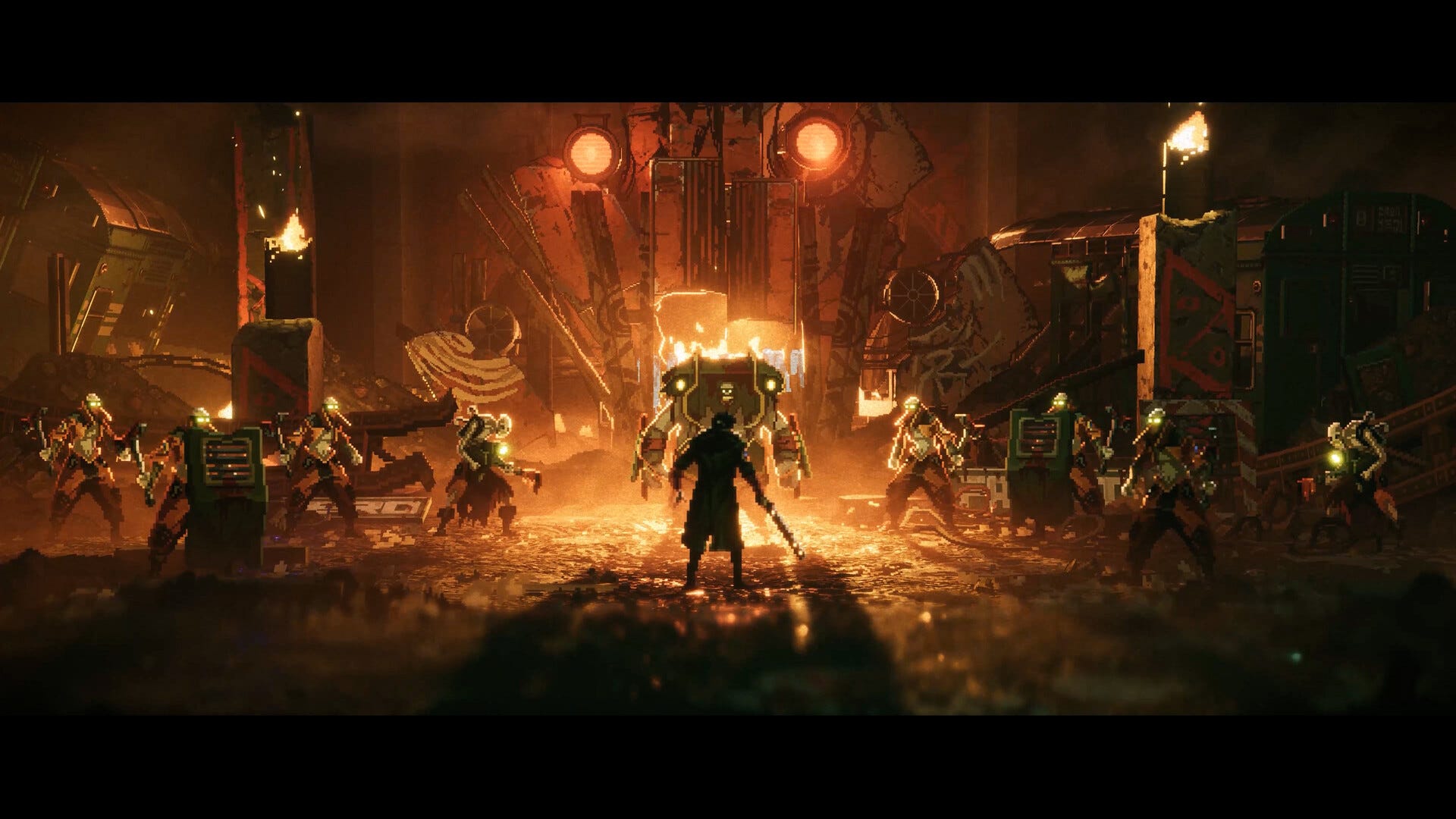
A brilliant and beautiful game whose tumultuous development cycle appears as gameplay bruises on an otherwise masterful execution of indie game design.
REPLACED is an incredibly novel story, with a surprisingly fleshed-out world, multi-dimensional characters, and twists and turns that don’t feel particularly predictable or nonsensical. Conversely, during my several hours with the title, the gameplay never felt quite right. The movement, the combat, the platforming, and the puzzles all felt as if they were one step away from where they needed to be. These two wolves within the game were constantly battling, leaving me overall more conflicted and down on the game than I wanted to be on something that has the foundation needed to be in the upper echelon of modern indies.
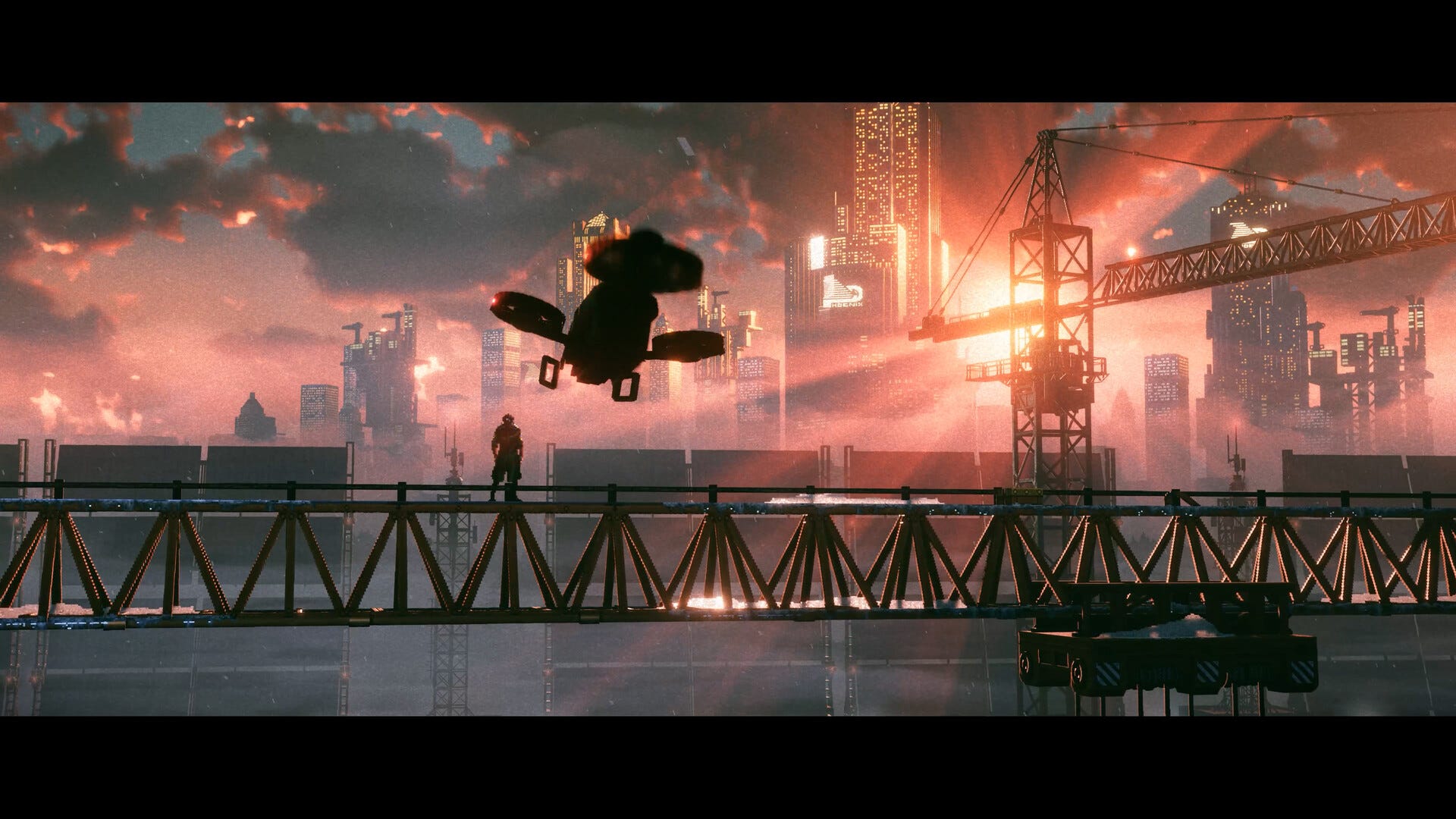
The idea behind REPLACED is that you play as a futuristic AI that, due to some unforeseen circumstances at the start of the game, gets inserted into a human body. The AI, whose name is Reach, sets out with the goal of returning its host body to its previous owner.
On its own, the premise is interesting, but the game really stretches its legs when delving into the surrounding circumstances casting a shadow over your adventure. You live in an alternate-history U.S. where the government has fallen apart after a disastrous and dangerous event in the past, and a non-profit group has swept in to pick up (read: profit on) the pieces. The story takes place as the country has evolved into two fractured halves, consisting of the protected and the scavengers, with the scavenger side being fractured even further into multiple subgroups that all have different approaches to tackling this new world they’ve found themselves in.
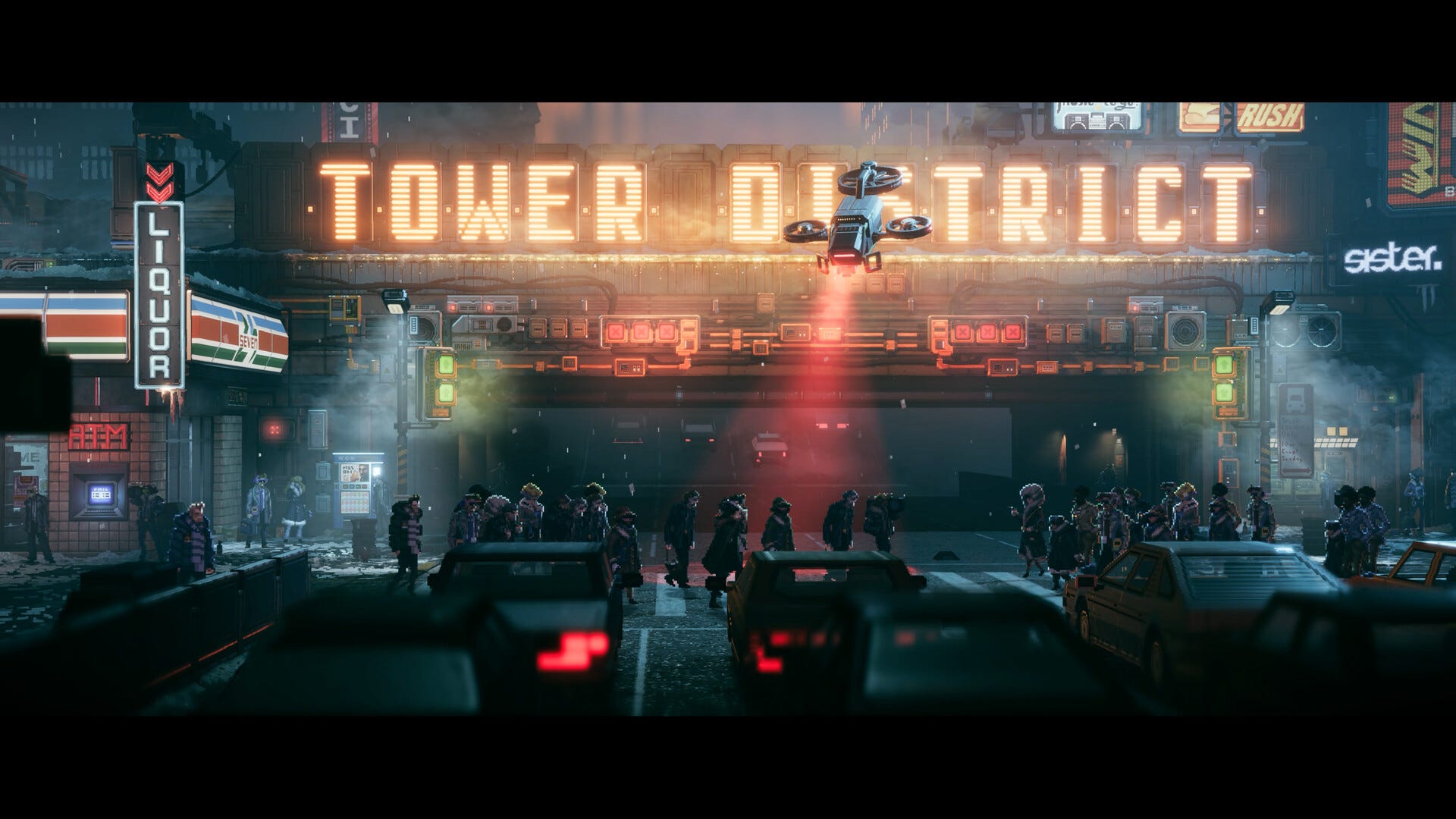
REPLACED goes deeper than most games when it comes to conveying the nuances of its story. It’s easy to set up a generic villain and have us pursue them because we are comically good and they are comically evil. This is not that. From the very beginning, REPLACED grapples with the ideas of ethicality versus rationality, evil and destruction for the sake of the greater good, and what it means to rule and prosper over a pile of ashes. Up until the credits roll, we are constantly seeing vignettes of both the smaller and bigger picture of it all. We see people whose only concern in this world are their loved ones, soldiers grappling with what it means to be happy when everything is terrible, and how small moments in a person’s life can lead them to make irrational decisions that have unbelievable echoes throughout society.
There were many alternate versions of this story that could have been corny or generic-feeling, but REPLACED conveyed a world that was deep and intriguing to learn about from start to finish. Seeing events unfold through the eyes of Reach, who has never truly known the human experience, while simultaneously hearing the trials and tribulations from those around him that have been living this nightmare for years at this point, was a fantastic juxtaposition. And although the game was around 10 hours long, it was plenty of time to empathize with and understand the few core characters introduced to us throughout the ten chapters, leaving me desperately wanting to revisit this world again sometime in the future.
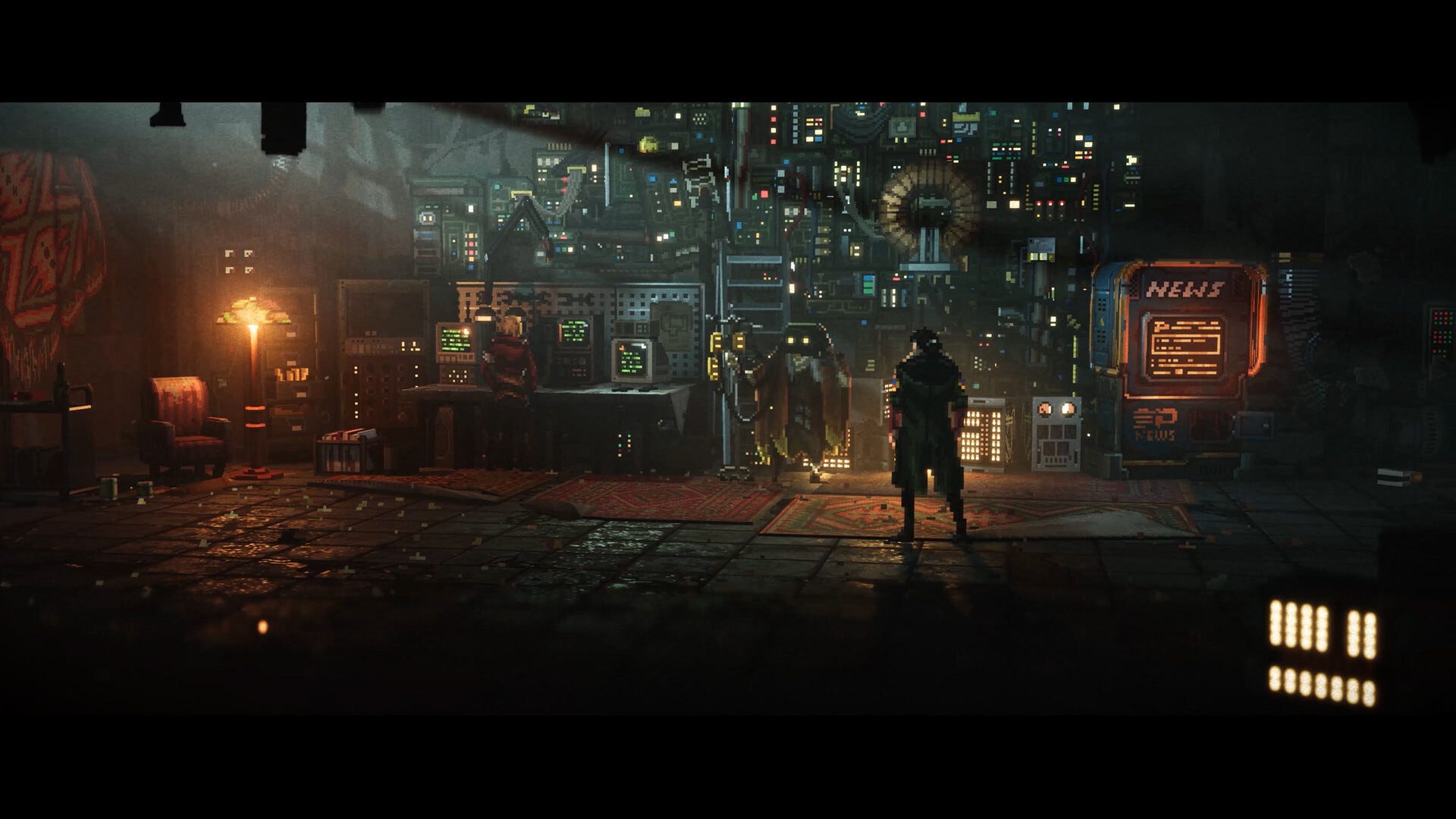
Of course, a big part of how you perceive the story depends on how it’s delivered to you, and REPLACED clearly takes its visual, and overall cinematic, direction very seriously. It’s a big reason so many people got invested in the first place. The colors, the lighting, the camera movements, the animations, and so many other elements come together to really make you believe you’re embedded within a cinematic work of art. Little touches like the camera shifting focus as a bolt whizzes past your head into the foreground, or even the tactile sound and animation of the Walkman-like device you use to read notes and communicate, all showcase an attention to detail hell-bent on immersing you in the moment.
Unfortunately, that immersion is often broken by a collection of minor annoyances peppered throughout almost every aspect of the gameplay. This is not to say that anything is particularly broken or unplayable, but REPLACED might be the first game I’ve played where pretty much every gameplay mechanic was one step away from being great.
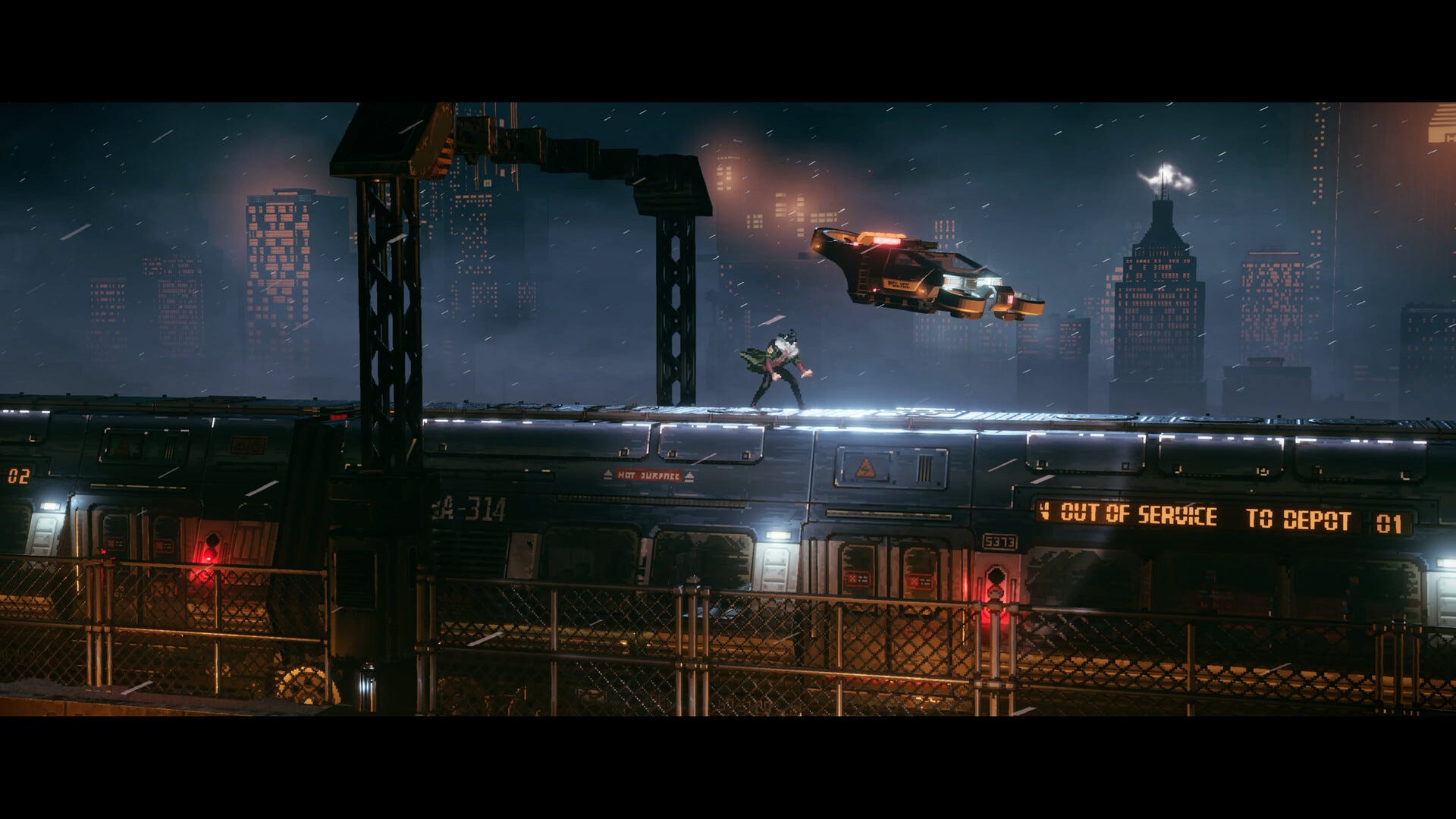
When the game was first revealed, everyone worried that the combat wasn’t going to deliver, and to be honest, that might be the one aspect I have the fewest issues with. Everything is built around a simple melee, counter, and dodge system very similar to the Batman Arkham games. As things progress, you unlock additional tools to help control the crowds of enemies that get progressively larger and harder to deal with. This is completely serviceable, but there is a feeling of sluggishness that really starts to become apparent near the end of the game. As you start to have six enemies on screen, two shooting you from both sides, one rushing you, and so on, the ability to seamlessly switch between targets in a 2D space begins to break down. It’s often tough to focus on the right enemy as they move back and forth, shifting which character has priority for your attack. Luckily, the combat scenarios never get too overwhelmingly difficult, but regardless, it does get frustrating taking damage due to what feels like slow reflexes from your character or attacks landing on an unintended target.
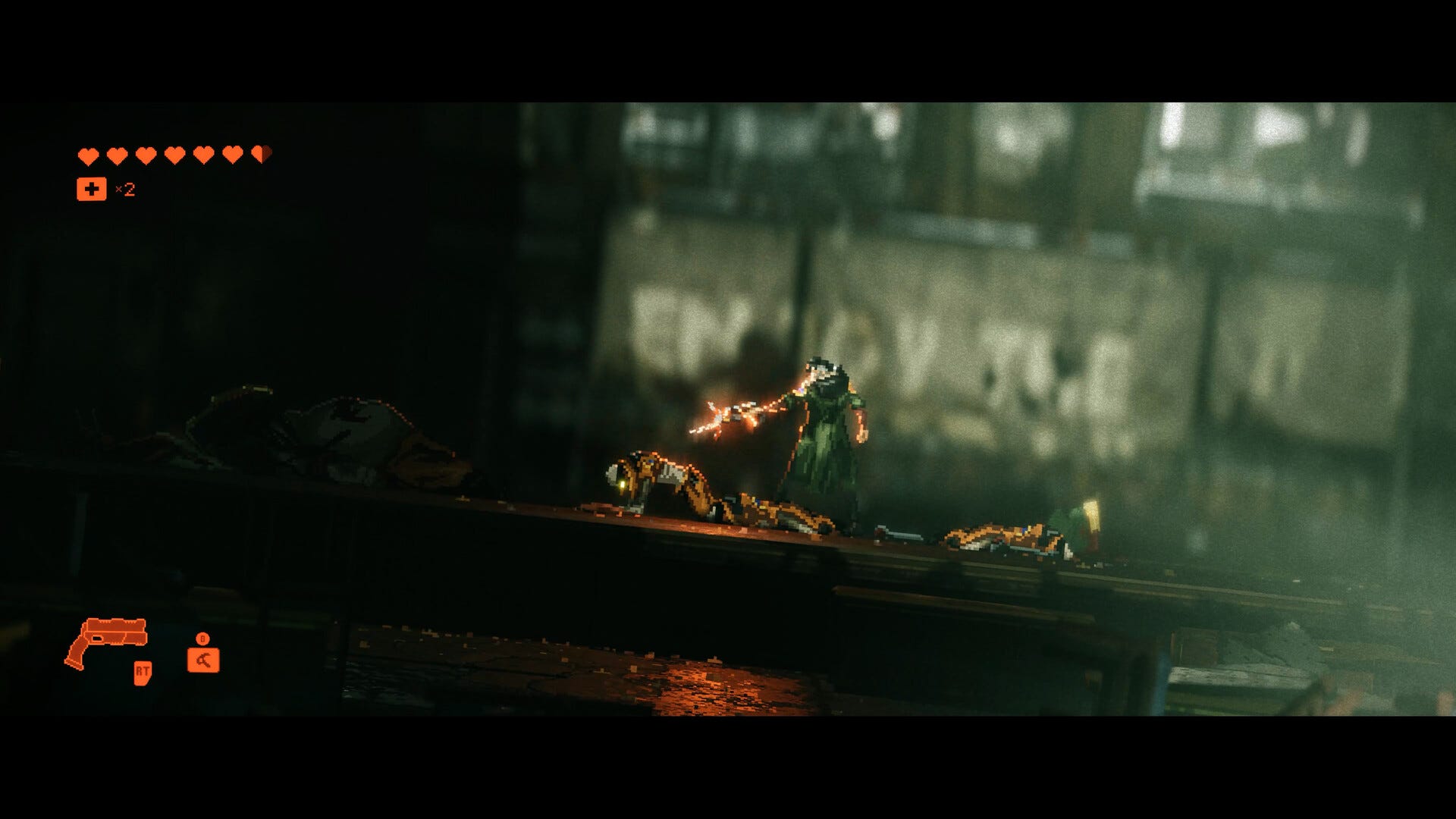
Of course, losing the occasional fight here and there wouldn’t be so bad if I were really enjoying the gameplay. Sadly, oftentimes it just never clicked. Sometimes the checkpoints would set me back 3–4 minutes before the sequence I actually lost at. Many times, replaying content meant enduring Reach’s incredibly slow movement speed and timing-based platforming that frequently felt imprecise or awkward.
Individually, these issues are barely a footnote, but over time these minor complaints will snowball, leaving you with this Rube-Goldberg-style amalgamation of issues. More than once it turned a few gameplay sections sour as it felt like every couple of minutes, the amount of collective friction from the gameplay would completely break my immersion and investment in what was happening on screen. And the saddest part is, I genuinely think a lot of the issues I had were not due to poor gameplay decisions, but more so due to a lack of polish. I am dumbfounded that I am somehow left wondering what this game, of all games, could have been with a little more time.
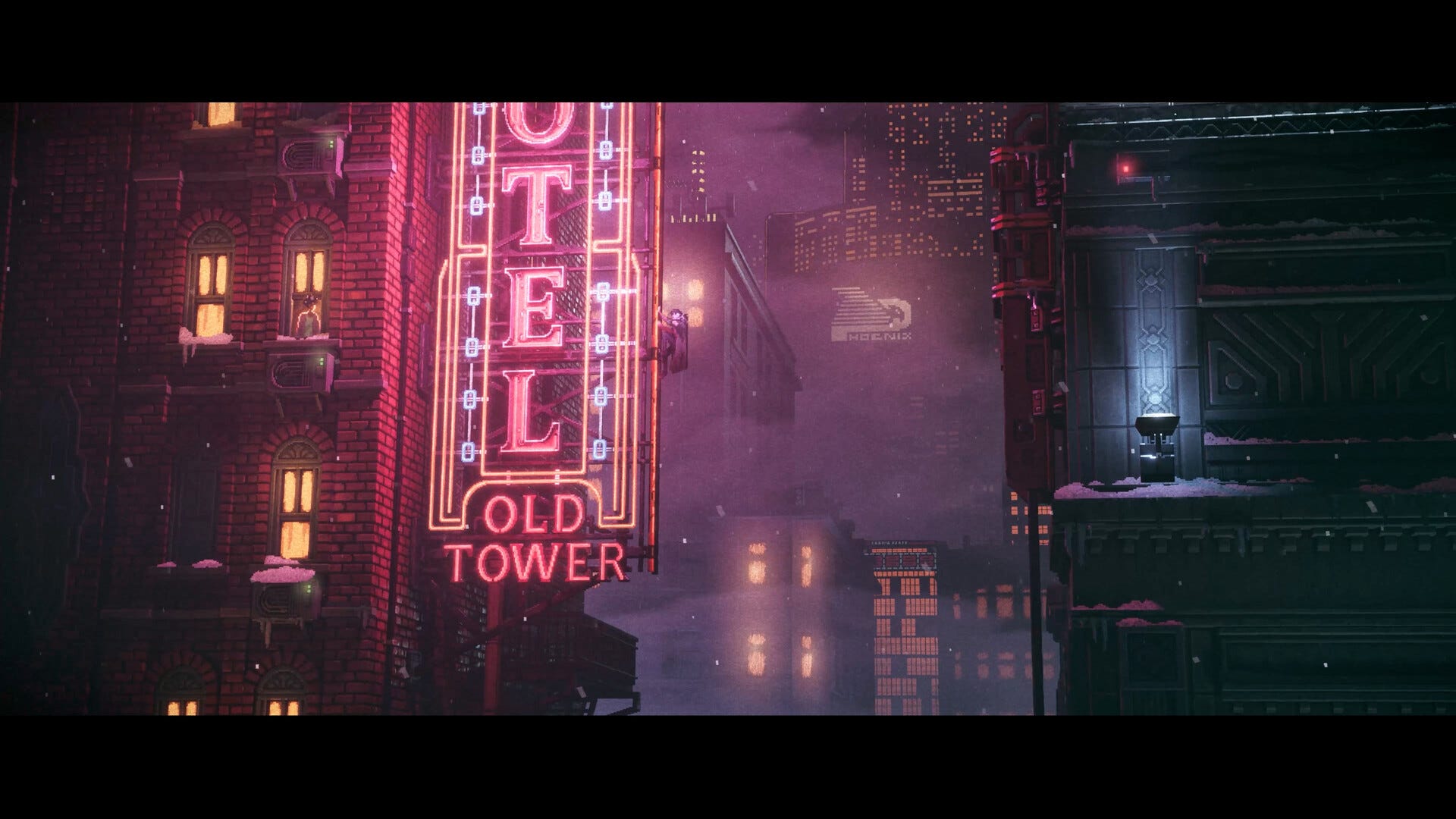
Meanwhile, it often seemed like the best mechanics were the ones seldom revisited. There are about three genuine boss fights in the game, and while none were particularly tricky or groundbreaking, they seemed like a great way to cap off a chapter. Instead of leaning into the boss concept more heavily, we end up with chapter finales (including the very last one) that are just a few more waves of enemies than normal. The second half of the game introduces a few genuinely interesting puzzle mechanics, but the variety and frequency of them make puzzle solving come across as an afterthought rather than an inspired choice. And while most of these moments ended up being glorified fetch quests, the side missions actually felt like they added a lot of color to the world through environmental storytelling. I honestly would have loved one or two more of those instead of the retro arcade machine games that seemed like they required a non-trivial amount of effort to put together.
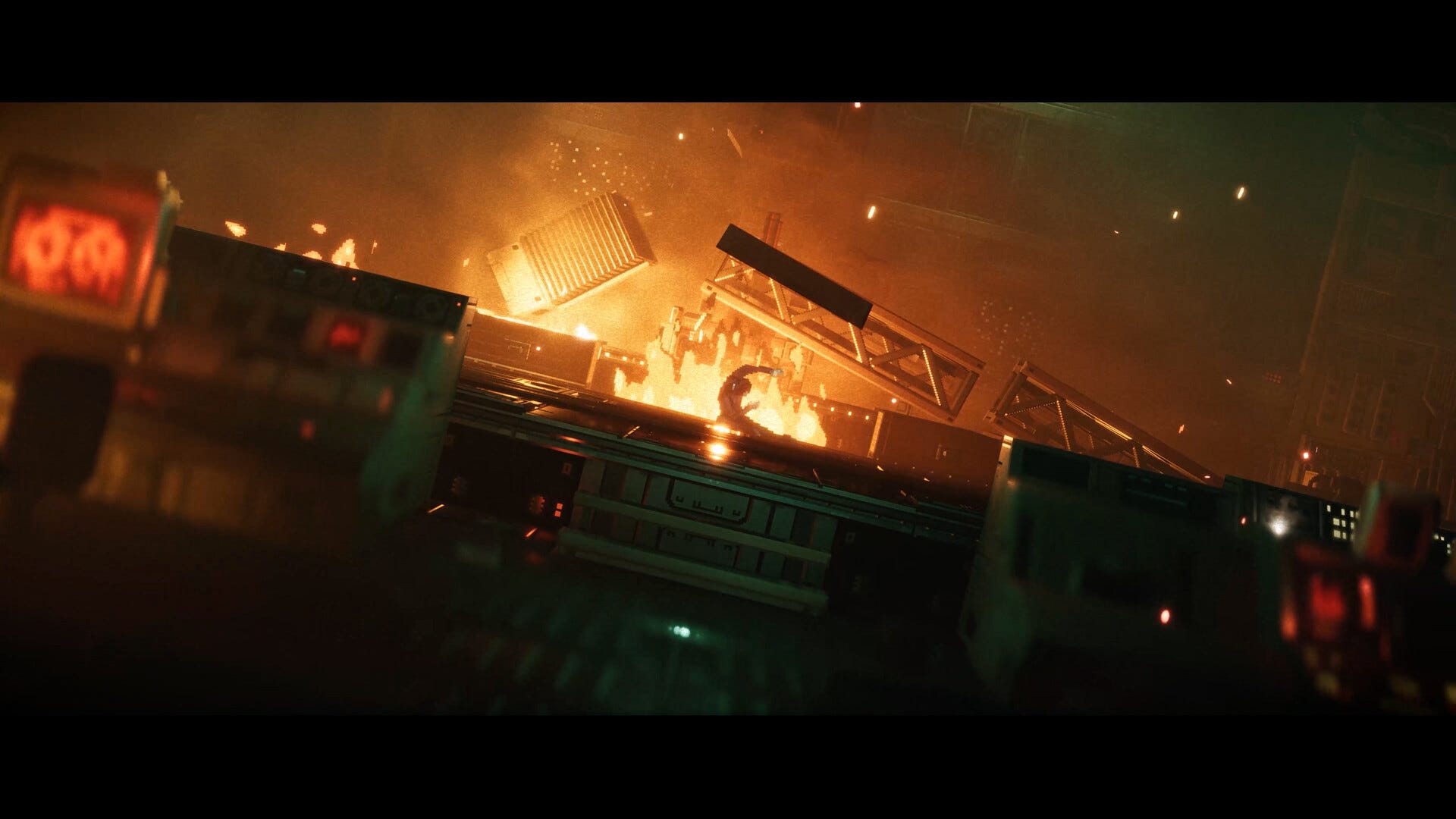
These are the two wolves laid bare. You have a story that is fleshed out, fast-paced, and cinematic, often brought to a halt by sluggish gameplay that only commits to the most basic of the wide array of mechanics it explores throughout its runtime. It’s as if you’re constantly being tapped on the shoulder, reminded that you’re playing a video game, when all you desperately want is to get lost in the story right in front of you.
I sit at a crossroads. REPLACED as a story, a world, and a visual spectacle raises the bar for indie games. I was invested from start to finish, and the directorial ambition of the game never ceased to amaze me. Meanwhile, REPLACED as a platformer and an action game doesn’t even meet the bar for modern indie games. Gameplay is slow, simple, clunky, and provides an average level of entertainment at best. So on one hand, if you’re a sci-fi story fan, this could be the best gaming story you’ve experienced in a long time, and on the other hand, if you’re more of a gameplay first player this could be and incredibly slow and somewhat repetitive experience that doesn’t quite ever really take off. Still, I find myself recommending it, because with its shorter runtime and reasonable price tag, I think it would be irresponsible of me to turn people away from what might be a select few’s favorite gaming adventure of the year.